Brazil Nuts: Benefits, Nutrition and Selenium Safety
Brazil nuts are the richest food source of selenium you can buy, and that single fact explains both why people love them and why they need a little care. A small serving delivers far more of this trace mineral than almost any other food, which can help if your intake is low, but it also means Brazil nuts are easy to overdo in a way that almonds or walnuts never are.
Below, we look at Brazil nut nutrition, what the research on their benefits actually shows, how they compare with a selenium supplement, and the safety questions competitors tend to skip, from allergen labels in the US and Canada to the radium story.
Key takeaways
- A standard 28 g (1 oz) serving of Brazil nuts supplies close to 10 times the Daily Value for selenium, according to the US National Institutes of Health.
- Trials consistently show Brazil nuts raise selenium levels and antioxidant enzyme activity; evidence for cholesterol, inflammation and brain benefits is limited or mixed.
- Selenium content varies widely from nut to nut and batch to batch, so think of Brazil nuts as an occasional, small-portion food, not a handful-a-day snack.
- Selenium supplements haven’t prevented cancer in large trials and may slightly raise type 2 diabetes risk, so food is usually the better route.
- Brazil nuts are a tree nut allergen that must be declared on food labels in both the US and Canada.
What are Brazil nuts?
They’re the large, crescent-shaped seeds of Bertholletia excelsa, a tall tree that grows in the Amazon rainforest. Botanically they’re seeds rather than true nuts, but for cooking, nutrition and allergy purposes they’re treated as tree nuts.
Each hard, woody pod holds a cluster of seeds packed together like orange segments, and each seed sits inside its own tough shell. Most of what you’ll find in US and Canadian grocery stores is sold already shelled, either raw or roasted, on its own or in mixed-nut blends.
Brazil nuts nutrition facts
They’re energy-dense and mostly fat, with a nutrient profile dominated by selenium. The figures below come from USDA FoodData Central for the dried, unblanched kind, with Daily Value (DV) percentages based on the US DVs used on Nutrition Facts labels.
Here’s what a 28 g (1 oz) serving, roughly six to eight kernels, provides:
| Nutrient | Per 28 g (1 oz) | What it means |
|---|---|---|
| Calories | About 186 kcal | Similar to other nuts; easy to over-snack |
| Total fat | About 19 g | Mostly mono- and polyunsaturated fat, with about 4 g saturated |
| Protein | About 4 g | A modest plant protein boost |
| Carbohydrate | About 3.5 g | Very low in sugar |
| Fibre | About 2 g | Helps toward daily fibre needs |
| Selenium | Close to 10 times the DV | The richest common food source |
| Copper | Just over half the DV | Supports iron metabolism and connective tissue |
| Magnesium | About a quarter of the DV | Useful for muscle and nerve function |
| Phosphorus | About one-sixth of the DV | Works with calcium in bones |
| Vitamin E, thiamin, zinc | Roughly 10 to 15% of the DV each | Smaller but helpful contributions |
The selenium figure is the one that matters most. The NIH Office of Dietary Supplements (ODS) selenium fact sheet puts them at the top of its food-source table, at 989% of the DV per ounce, while noting that values from other analyses “vary widely.” By comparison, the next-richest foods on the list, such as tuna and halibut, supply less than twice the DV per serving.
The magnesium is a nice bonus too. If you’re comparing food sources with supplements, our guide to the different types of magnesium explains how supplement forms differ.
Why selenium is the headline nutrient
Selenium is a trace mineral your body builds into about two dozen selenoproteins. These include the glutathione peroxidases, enzymes that help neutralize oxidative damage, and the deiodinases, which help convert thyroid hormone into its active form.
You need only a little, and in the US most people already get enough. The ODS consumer fact sheet says most people in the United States meet their needs from food, though people on kidney dialysis, people living with HIV and people whose diets rely on plants grown in selenium-poor soils may fall short. Grains, meat, seafood, eggs and dairy all contribute, which is why deficiency is uncommon in North America.
That context matters. For most readers these nuts are a pleasant way to cover selenium needs, not a fix for a widespread deficiency.
What are the benefits of Brazil nuts?
Their clearest benefit is that they reliably raise selenium levels. Beyond that, the research is promising in places but mostly based on small studies. Here’s how each claim stacks up.
1. Raising selenium status (strong evidence)
In a 12-week randomized trial published in the American Journal of Clinical Nutrition in 2008, researchers at New Zealand’s University of Otago gave 59 adults a small daily serving of the nuts, a selenium supplement (selenomethionine) or a placebo. Blood selenium rose by about 64% in the Brazil nut group and 61% in the supplement group, versus about 8% with placebo. Activity of glutathione peroxidase rose more in the Brazil nut group.
A 2022 meta-analysis of eight randomized trials in Antioxidants confirmed the pattern: eating them significantly increased blood selenium and glutathione peroxidase activity across very different groups, from adolescents with obesity to older adults.
2. Antioxidant activity (moderate evidence)
Because selenium feeds directly into antioxidant enzymes, higher enzyme activity is a consistent finding. A 2022 systematic review of 24 clinical trials in Foods found improved antioxidant status across every health state studied, including people on hemodialysis and people with type 2 diabetes. Whether those biomarker changes translate into fewer health problems over time hasn’t been tested.
3. Cholesterol and heart health (mixed evidence)
Results here are inconsistent. A 2013 crossover study of just 10 healthy volunteers found that a single large serving lowered LDL cholesterol and raised HDL cholesterol over the following days. But when the 2022 meta-analysis pooled the randomized trials, it found no significant effect on LDL, total cholesterol or HDL. The authors called for more research before drawing conclusions.
Nuts in general are part of heart-healthy eating patterns, so these can fit, but there’s no good evidence that they’re special for cholesterol.
4. Inflammation (limited evidence)
A small 2014 crossover trial in Nutrition with 10 healthy young adults found that a single serving lowered several inflammatory markers, including interleukin-6 and TNF-alpha, without harming liver or kidney markers. The 2022 meta-analysis, however, found no consistent change in C-reactive protein. Treat this as an interesting signal, not a reason to eat more.
5. Brain health (limited evidence)
In a six-month pilot trial published in the European Journal of Nutrition in 2016, older adults with mild cognitive impairment who ate a small daily portion showed higher selenium levels and improvements in some tests, such as verbal fluency. Only 20 people completed the study, so it can’t tell us whether Brazil nuts protect memory.
6. Thyroid health (limited and mixed evidence)
Selenium matters for thyroid hormone metabolism, and the ODS notes that selenium supplements may lower thyroid antibodies in some people with autoimmune thyroiditis (Hashimoto’s). Results are inconsistent, though, and research using Brazil nuts specifically is scarce. If you have a thyroid condition, talk to your doctor before using Brazil nuts or supplements as a strategy.
Here’s the evidence at a glance:
| Claimed benefit | What the research shows | Evidence strength |
|---|---|---|
| Raises selenium levels | Consistent across randomized trials and a 2022 meta-analysis | Strong |
| Boosts antioxidant enzymes | Glutathione peroxidase activity rises in most trials | Moderate |
| Lowers cholesterol | One tiny study positive; pooled trials show no significant effect | Mixed |
| Reduces inflammation | Small single-meal studies; no consistent CRP change | Limited |
| Supports brain function | One 20-person pilot trial in mild cognitive impairment | Limited |
| Supports thyroid health | Selenium supplement data are mixed; little Brazil nut-specific research | Limited / mixed |
Brazil nuts vs selenium supplements: which is better?
For most people, the nuts themselves, or simply a varied diet, are a better way to get selenium than a stand-alone supplement. The 2008 Otago trial showed a small serving of nuts raised selenium status at least as well as a supplement, and food brings fibre, healthy fats and other minerals along with it.
Large supplement trials have also been disappointing. A Cochrane review of 10 randomized trials with more than 27,000 participants found that selenium supplements did not reduce overall cancer risk. The same review reported a slightly higher risk of type 2 diabetes with supplementation, and the largest trial saw more hair loss and dermatitis among people taking selenium.
Manufacturing quality matters, too. The ODS describes a 2008 incident in the US in which 201 people had severe reactions after taking a liquid supplement that contained 200 times the selenium stated on the label.
If your doctor does recommend a selenium supplement, here’s what to check where you live:
- In Canada: selenium supplements are regulated as natural health products (NHPs) and should carry an eight-digit Natural Product Number (NPN), which you can look up in Health Canada’s Licensed Natural Health Products Database.
- In the US: supplements don’t need FDA approval before sale, so look for third-party verification such as USP Verified or NSF Certified.
- Everywhere: count the selenium in your multivitamin, protein powders and any thyroid or “immune” blends before adding selenium-rich nuts on top.
Our guide on how to choose quality supplements covers label checks and testing seals in more detail. For brands, our overview of natural health product regulations in Canada explains how mineral supplements are licensed.
Why selenium content varies so much between Brazil nuts
The amount of selenium in a Brazil nut depends largely on the soil where its tree grew. The ODS explains that selenium in plant foods depends on the amount and form of selenium in the soil, as well as factors like soil pH, so levels vary widely by region.
The 2022 Foods review shows how wide that range can be: across the trials it examined, the selenium supplied by the Brazil nuts used ranged from very modest amounts in a six-nut serving to many times more in a single nut. In other words, a per-nut figure you read online is an average, not a promise about the bag in your pantry.
That’s the main reason we don’t recommend a fixed daily nut count. Instead, treat them as a food to enjoy in small portions now and then, and ask a registered dietitian if you’re trying to manage selenium intake for a specific reason.
Side effects, risks and who should avoid Brazil nuts
They’re safe for most people in modest amounts. The risks come from eating too many over time, allergies, and a few specific health situations.
Selenium toxicity (selenosis)
Because a standard 28 g (1 oz) serving can already exceed the tolerable upper intake level for adults set by the US National Academies, which Health Canada also uses, regular large portions can push you into excess. According to the ODS, chronic high selenium intake can cause:
- Hair loss and brittle or discoloured nails
- A garlic odour on the breath and a metallic taste in the mouth
- Skin rashes, nausea, diarrhea and fatigue
- Irritability and, in severe cases, nervous system problems
If you notice these symptoms and you’ve been eating Brazil nuts often or taking selenium-containing supplements, stop and talk to a doctor.
Tree nut allergy
Brazil nuts are a tree nut, one of the most common causes of severe allergic reactions. In Canada, Health Canada lists tree nuts, including Brazil nuts, as a priority food allergen that must be declared by name on prepackaged food labels. In the US, tree nuts are one of the nine major food allergens under federal law, and FDA’s 2025 labelling guidance keeps Brazil nut on its list of tree nuts that must be declared. People with one tree nut allergy may react to others, so check with your allergist.
Radium and radioactivity
The trees naturally absorb small amounts of radium from the soil. A 2024 literature review in Nutrition Bulletin estimated that eating a Brazil nut every day would add a radiation dose well below the general-public limit set by health authorities. The authors concluded this exposure “appears to be neither clearly harmful nor clearly harmless” and called for more research. It’s one more reason to keep portions small rather than a cause for alarm.
Who should talk to a professional first
Check with your doctor, pharmacist or a registered dietitian before eating them regularly if you:
- Are pregnant or breastfeeding
- Have a thyroid condition or kidney disease, or are on dialysis
- Take a multivitamin or supplement that already contains selenium
- Are receiving chemotherapy such as cisplatin, which the ODS notes can affect selenium levels
- Are managing your weight closely, since they’re calorie-dense
How to eat Brazil nuts sensibly
The easiest approach is to treat them as an occasional ingredient rather than a daily supplement. A few practical habits help:
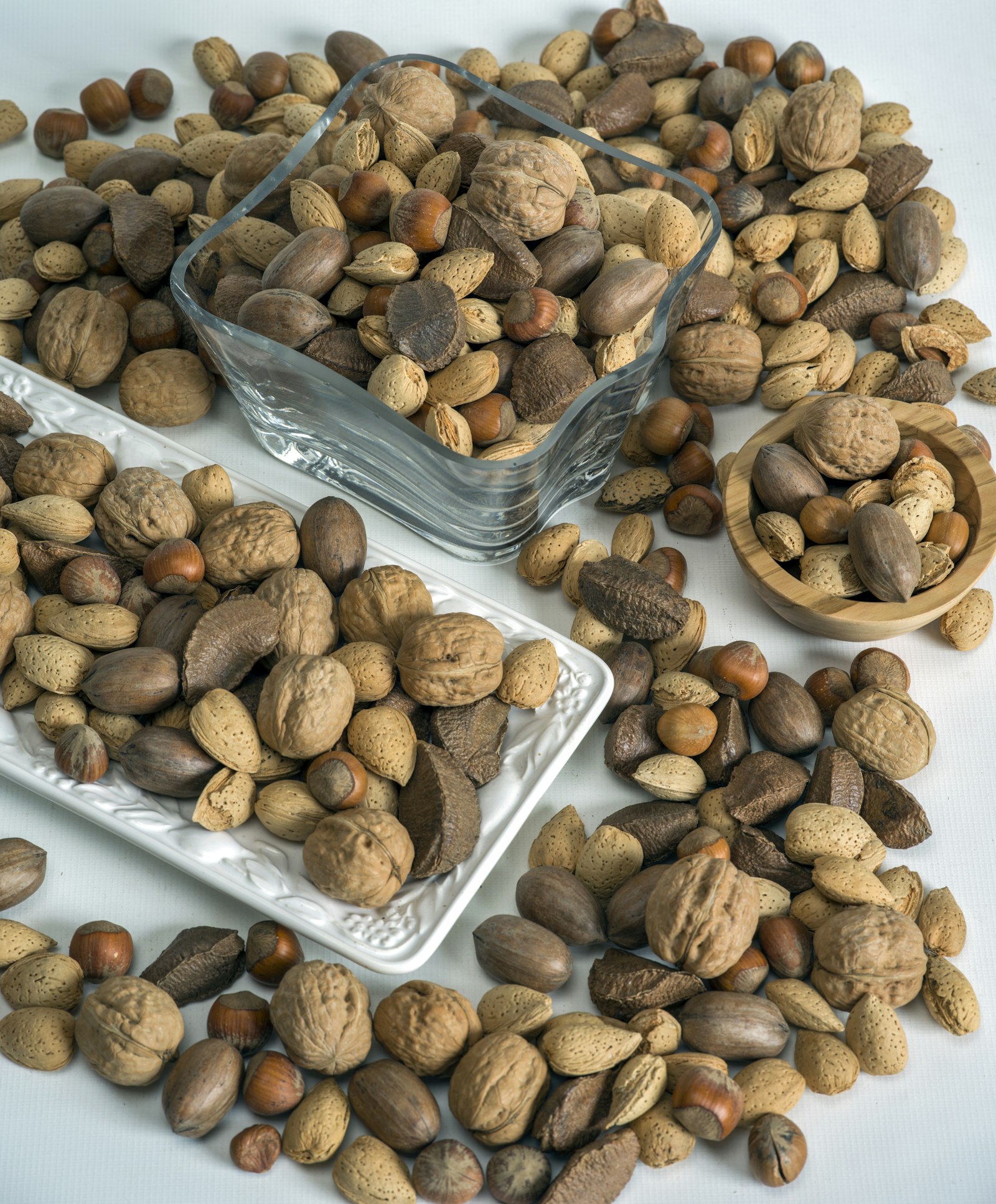
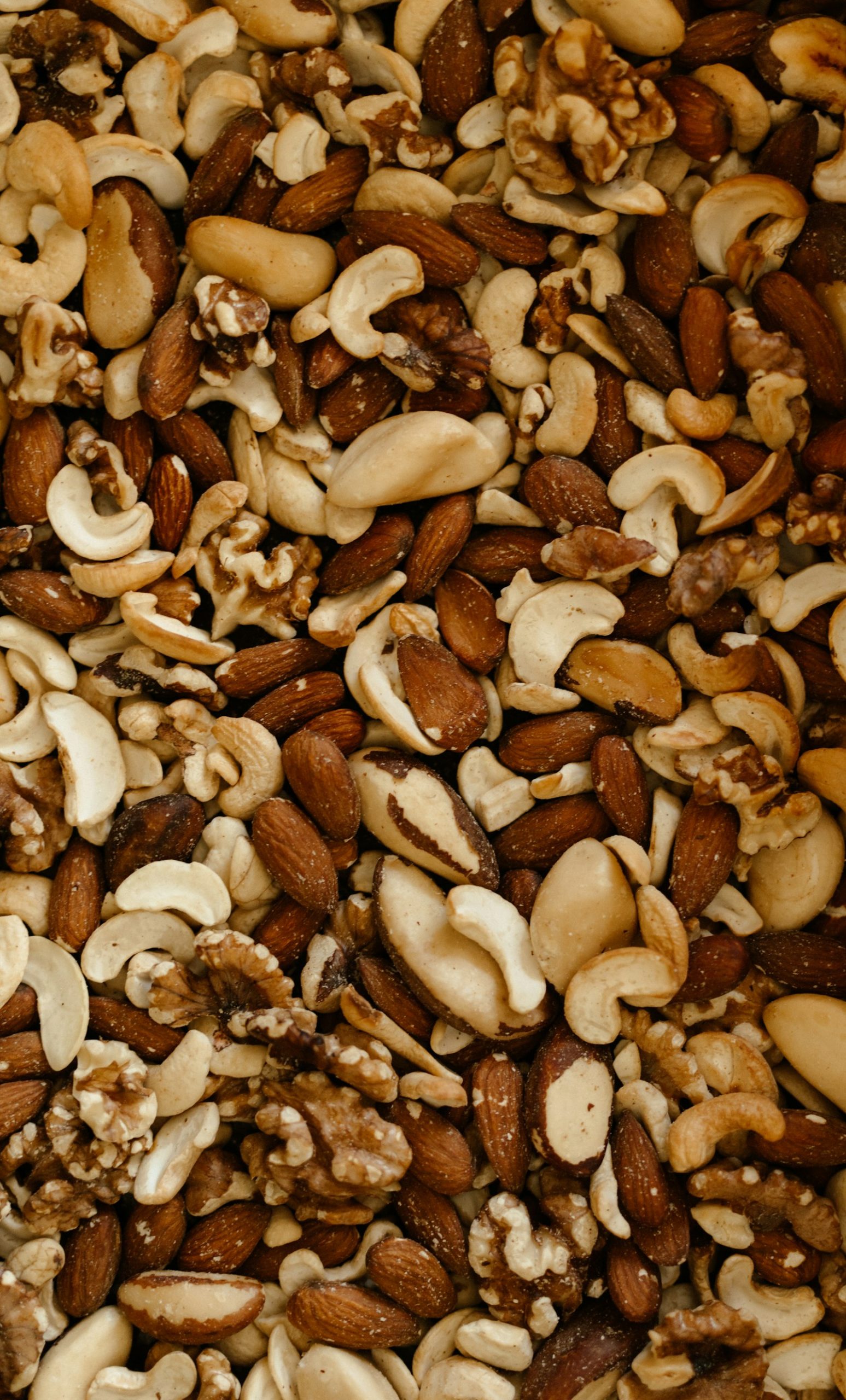
- Mix them in. Buy a mixed-nut blend or add a couple of chopped Brazil nuts to a jar of almonds, walnuts and pumpkin seeds, so they’re part of a varied snack rather than the whole snack.
- Use them as a topping. Chop and sprinkle over oatmeal, yogurt, salads or roasted vegetables, where a small amount goes a long way.
- Pick plain. Unsalted, raw or dry-roasted nuts avoid the extra sodium and sugar of seasoned or chocolate-coated ones.
- Store them cool. Their high unsaturated-fat content means they can turn rancid. Keep them in an airtight container in the fridge or freezer, and toss any that smell sharp or taste bitter.
- Count your total selenium. If you eat a lot of seafood or organ meats, or take a multivitamin, you likely don’t need these nuts for selenium at all.
Nuts and seeds also count toward the plant variety your gut bacteria thrive on. Our pillar guide on how to improve gut health explains why eating a wide range of plants each week matters.
What to look for in the US and Canada
The rules around these nuts and selenium differ a little on each side of the border. Here’s a quick comparison:
| Question | In Canada | In the US |
|---|---|---|
| Are Brazil nuts a labelled allergen? | Yes, tree nuts (including Brazil nuts) are a priority allergen declared by name | Yes, tree nuts are a major allergen; Brazil nut remains on FDA’s list |
| How are selenium supplements regulated? | As natural health products; look for an NPN | As dietary supplements; no pre-market approval, so look for USP or NSF seals |
| Where can I check a supplement? | Health Canada’s Licensed Natural Health Products Database | NIH Dietary Supplement Label Database and ODS fact sheets |
| Where can I read about selenium needs? | Health Canada uses the same intake references as the US National Academies | NIH Office of Dietary Supplements selenium fact sheets |
The bottom line
They’re a nutritious food and the most concentrated natural source of selenium. The research clearly shows they raise selenium levels and antioxidant enzyme activity, but claims about cholesterol, inflammation, brain health and thyroid support rest on small or mixed studies.
Enjoy them in small, occasional portions as part of a varied diet, skip a separate selenium supplement unless a health professional recommends one, and be mindful of allergies. For more evidence-based food and lifestyle guidance, browse our nutrition and wellness articles.
Frequently asked questions
Are Brazil nuts good for you?
Yes, in small amounts. Brazil nuts provide healthy fats, some protein and fibre, and minerals such as copper and magnesium, plus more selenium than almost any other food. Research consistently shows they raise selenium levels and antioxidant enzyme activity. The catch is that their selenium is so concentrated that large, regular portions can lead to excess, so moderation matters more than with other nuts.
How many Brazil nuts should you eat a day?
There’s no official number, and selenium content varies so much between nuts that any fixed count is only a rough guide. Because a standard 1 oz serving can already exceed the adult upper limit for selenium, treat Brazil nuts as an occasional, small-portion food. If you take a multivitamin or have a health condition, ask a registered dietitian or pharmacist what makes sense for you.
Are Brazil nuts radioactive?
Slightly. Brazil nut trees absorb natural radium from the soil, so the nuts contain trace amounts. A 2024 review estimated that eating one nut a day adds a radiation dose well below the general-public limit, though the authors said the long-term effect isn’t certain. Keeping portions small, which you should do anyway because of selenium, also keeps this exposure low.
Can Brazil nuts help your thyroid?
Possibly, but the evidence is thin. Selenium helps activate thyroid hormone, and some studies of selenium supplements found lower thyroid antibodies in people with Hashimoto’s thyroiditis, though results are mixed. Few studies have tested Brazil nuts directly. If you have a thyroid condition, talk to your doctor before using Brazil nuts or selenium as part of your care.
Are Brazil nuts better than a selenium supplement?
For most people, yes. A 2008 randomized trial found a small daily serving of Brazil nuts raised blood selenium as effectively as a supplement. Large supplement trials have not shown cancer prevention and suggest a slightly higher type 2 diabetes risk. Food also brings fibre and other nutrients. Use a supplement only if a health professional advises it.
What happens if you eat too many Brazil nuts?
Eating large amounts regularly can cause selenosis, or selenium toxicity. Signs include hair loss, brittle nails, a garlic smell on the breath, a metallic taste, skin rash, nausea, diarrhea and fatigue. A one-off generous handful is unlikely to cause harm in a healthy adult, but if symptoms appear after frequent intake, stop eating them and check with a doctor.
Are Brazil nuts a nut or a seed?
Botanically, Brazil nuts are seeds. They grow in clusters inside a large woody pod on the Bertholletia excelsa tree in the Amazon. For food labelling and allergy purposes, though, both Health Canada and the US FDA treat them as tree nuts, so anyone with a tree nut allergy should avoid them unless their allergist says otherwise.
This article is for general information and isn’t a substitute for advice from a healthcare professional.
Sources and further reading: NIH ODS: Selenium fact sheet for health professionals (2025); NIH ODS: Selenium fact sheet for consumers; USDA FoodData Central: Brazil nuts, dried, unblanched; Thomson et al., Brazil nuts: an effective way to improve selenium status (Am J Clin Nutr, 2008); Effect of Brazil nuts on selenium status, blood lipids and oxidative stress: meta-analysis (Antioxidants, 2022); Effects of regular Brazil nut consumption on health: systematic review (Foods, 2022); Colpo et al., A single consumption of high amounts of Brazil nuts improves lipid profile (J Nutr Metab, 2013); Brazilian nut consumption by healthy volunteers improves inflammatory parameters (Nutrition, 2014); Cardoso et al., Brazil nut consumption and cognitive performance in mild cognitive impairment (Eur J Nutr, 2016); Cochrane: Selenium for preventing cancer (2018); Koeder and Keller, Radium levels in Brazil nuts: a review (Nutrition Bulletin, 2024); Health Canada: Tree nuts, priority food allergens; US FDA: Food allergies; Health Canada: Licensed Natural Health Products Database.